
Anil Makam, MD, MAS, in Conversation
ARC Associated Faculty member, Anil Makam MD, MAS, recently spoke to A Good Omen Podcast where he explained how epidemiological training transformed his clinical practice after two decades of work.
Dr. Makam examines the strengths and limitations of Bayesian clinical reasoning, paying close attention to how his framework for thinking about helping patients evolved in a space honed thru clinical practice and clinical experience. He recommends students see more patients, “Scouring literature needs to be accompanied by acute practice of observation and recording patient data gathered face to face…that’s how you increase your library of prior probabilities.”
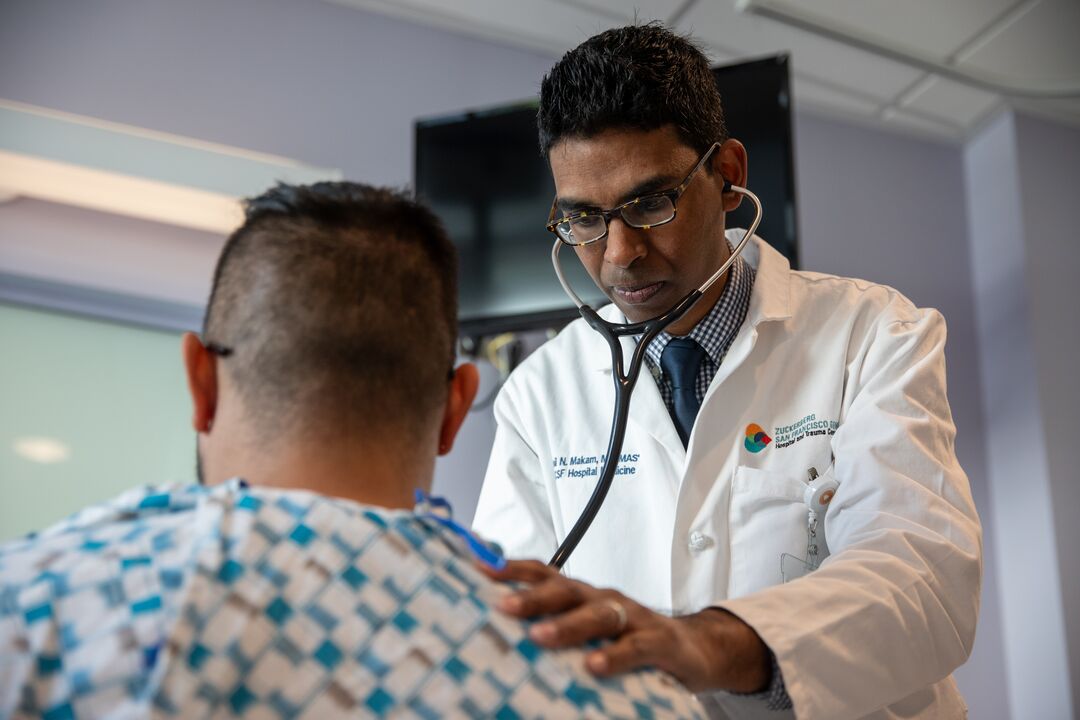
Looking toward medicine's AI-augmented future, Dr. Makam thinks the inherent uncertainty in algorithms requires consistent human processing and critical analysis, arguing that technical knowledge alone won't distinguish excellent clinicians. What matters is the ability to gather disparate clinical information, translate it meaningfully, and apply contextual judgment that incorporates both population-level evidence and experience-based priors
So he stresses the importance of continuous clinical practice over time, and epidemiology as a lens to question one’s goals and purpose when thinking about actions such as administering tests and educating oneself on diseases and combing that with context. “It's a way of taking what you know to your patient rather than the average among over hundreds, thousands of patients who may or may not be like your patient at all,” he shares.
Hear more via the link.
Dr. Makam is Associate Professor in the Division of Hospital Medicine at UCSF, a hospital medicine physician, and nationally recognized health services researcher at ZSFG.