
Faculty Spotlight: Maya Vijayaraghavan, MD, MAS
Dr. Vijayaraghavan is a practicing general internist and a researcher in tobacco control with a focus on populations experiencing homelessness. She is the Steven A. Schroeder Distinguished Professor of Health and Health Care and the director of the UCSF Smoking Cessation Leadership Center, a Center focused on eliminating disparities in tobacco use prevalence among behavioral health populations.
Her work spans individual, community, health system, and policy levels to expand access to smoking cessation services. In her work, Dr. Vijayaraghavan also partners with community organizations and healthcare systems to design intervention research, including collaborations with homeless shelters and supportive housing to implement smoking cessation programs and smoke-free policies for people experiencing homelessness.
Dr. Vijayraghavan co-directs a NIDA-funded postdoctoral training program at the Center for Tobacco Control Research and Education, focusing on tobacco and substance use research, and serves as Professor in Residence at the Vijayaraghvan Lab. We caught up with her recently to learn more about her current work.
How did tobacco control and smoking cessation become drivers of your research? What is it about these issues that sparked (or continues to spark) your interest?
Dr. Vijayaraghavan: For me, tobacco use is fundamentally a health equity and social justice issue. My work in this area began after college when I worked as a street outreach worker supporting adults experiencing homelessness. During that time, I developed a strong interest in mental health and substance use, and I noticed that nearly everyone I worked with on the streets smoked. I have always been interested in addressing homelessness and still am, but through that work, I became deeply interested in studying tobacco use within the homeless population.
Tobacco use is disproportionately concentrated among individuals who face structural and systemic inequities, such as deep poverty, involvement with the criminal legal system, challenges with mental health and substance use, and limited access to opportunities for recovery and health. Studying tobacco use has shifted my perspective from framing it as an individual behavior—often associated with personal blame and failure—to understanding it as a behavior largely driven by structural inequities and commercial influences, including tobacco industry behavior. By examining the multi-level context of tobacco use, my research has evolved to focus on developing interventions that address its multi-level influences within community settings. By addressing tobacco use, my hope is that we may also be able to address the inequities that drive tobacco use.
In your experience, what are the biggest barriers people face when quitting tobacco use?
Dr. Vijayaraghavan: I believe one of the biggest barriers to addressing tobacco use is the widespread perception that it is solely an individual issue. This perception is often tied to fatalism, self-blame, and a sense of personal failure, all of which can hinder efforts toward tobacco cessation. Reframing tobacco use as a structural issue is essential to developing interventions that address individual behavior within the broader context of commercial and systemic drivers. Commercial drivers include the increased retail density, marketing, accessibility, and availability of tobacco products in low-income communities. Structural drivers encompass factors such as deep poverty, homelessness, and limited opportunities or an inadequate social safety net for recovery. Viewing tobacco use as both an individual and structural issue is critical to creating interventions that resonate with the lived experiences of those who use tobacco.
Another significant barrier is the lack of access to tobacco treatment services and tobacco-free policies at the community level, particularly within service settings for populations disproportionately impacted by tobacco use. These barriers are evident in homeless service settings, correctional facilities, housing, substance use and mental health treatment programs, where treatment is often unavailable or severely limited. These gaps represent missed opportunities to provide support and care.
Additionally, the tobacco industry continues to evolve, introducing new, highly addictive products that disproportionately impact young people and minoritized groups. The poly-use of multiple tobacco products further complicates cessation efforts and serves as another critical barrier to addressing tobacco use effectively.
The SCLC focuses on behavioral health in relation to tobacco use, and compartmentalizes its focus into priority groups, or people disproportionately impacted by tobacco-related illness and death in the US (including African Americans, American Indians/Alaska Natives, rural Americans, veterans, sexual and gender minorities, people living with mental illness, people with substance use disorders, people with criminal legal system involvement, people facing deep poverty, and people experiencing homelessness). With so many distinct groups burdened by tobacco-related illness and death, how can interventions be designed to help multiple communities at once?
Dr. Vijayaraghavan: Guideline-recommended tobacco treatment, which includes behavioral counseling and pharmacotherapy, has proven effective in addressing tobacco use. When paired with approaches like contingency management or financial incentives for tobacco cessation, these treatments can be highly effective if they are readily accessible. Contingency management has demonstrated success in addressing tobacco use and other substance use disorders across diverse populations.
While providing treatment is essential for reducing tobacco use, it is equally important to acknowledge the critical role of policies such as clean air or smoke-free policies, increasing cigarette prices, and limiting the sales of menthol and flavored tobacco products (among others). When paired with widespread access to community-based tobacco treatments, such policies can effectively reduce tobacco-related disparities.
Even with the availability of tobacco treatments and policies, tobacco treatment interventions must be rooted in the cultural context of tobacco use in communities. The cultural context varies depending on individuals’ identities, such as race, ethnicity, sex, gender, and other social factors. Incorporating an intersectionality-oriented perspective to understand tobacco use disparities is crucial for identifying interventions that effectively address the needs of individuals with intersectional identities.
How does addressing health care providers' attitudinal variations toward smoking cessation foster a more consistent anti-smoking message for these priority populations?
Dr. Vijayaraghavan: Engaging providers and cultivating champions among them is essential for addressing tobacco use. Healthcare providers across all disciplines—primary care, acute care, behavioral health, and specialty care—play a critical role, as patients trust us to share information and provide education about health and health-related behaviors. However, our work has demonstrated that social service providers are equally well-positioned to address tobacco use due to the strong connections between tobacco use and basic needs such as housing, food security, recovery, and mental health services. This is why our community-based interventions consistently include training for housing staff and shelter staff, equipping them with the skills to provide brief cessation coaching. We believe that anyone working with adults who smoke should be empowered to offer support and guidance for tobacco cessation. This is central to SCLC’s work in providing training and capacity building for healthcare, social services, and behavioral health providers.
More recently, we have begun developing cessation curricula designed to help providers deepen their understanding of the tobacco industry’s role in promoting tobacco use. By shifting the framework in this way, we aim to foster greater empathy and compassion among providers, enabling them to better understand the structural challenges their patients face in achieving tobacco cessation.
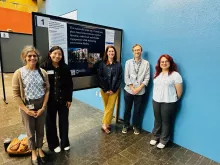
Turning to the Vijayaraghavan Lab’s work—the lab’s ongoing research focuses on interventions that increase voluntary adoption of smoke-free homes and increase access to cessation services with a focus on federally subsidized housing, subsidized housing residents, and people experiencing homelessness. Your approaches are community-engaged and incorporate a variety of methods—can you speak about why or how this variety and diversity of approaches is helpful?
Dr. Vijayaraghavan: One of the defining aspects of our lab’s work is its deep foundation in the community. Our research takes place in people’s homes, the places they stay or inhabit—including the streets or shelters—and is designed to align treatment with their lived experiences, whether they are experiencing homelessness, living in permanent supportive housing, or other forms of subsidized housing. It acknowledges that engaging in healthy behavior change is difficult when the environment does not support such change. This is why our efforts focus on the voluntary adoption of smoke-free policies and improving access to treatment in service settings, including housing and homeless services, where such resources have historically been lacking.
We employ multiple methods, including randomized clinical trial designs, qualitative and mixed-methods research, and implementation science approaches. Our data collection is conducted in the field using in-person, interviewer-administered methods to ensure credibility and rigor. Additionally, our team places significant emphasis on developing streamlined data systems and maintaining high follow-up rates among participants.
Over the past decade, we have built strong relationships with housing providers, homeless service organizations, pharmacists delivering community-based treatments, and healthcare providers serving these populations. These partners are central to the implementation of our interventions, as are the individuals who receive them. Through this work, I have gained a deeper understanding of the complexities of conducting community-based research and the importance of fostering meaningful, long-term relationships with community partners. This relationship-building process requires time, ongoing presence (even in the absence of funding), and a sustained commitment to the work.
Conducting field-based research requires specialized training for research staff. Our team is exceptional, and through their experiences and insights, we recognized the need for training that goes beyond standard clinical trial protocols. This includes incorporating trauma-informed research practices and resilience-building approaches to address the risks of vicarious traumatization and burnout. By integrating these practices, we strive to support the well-being of both our research teams and the communities we serve.
Can you speak about integrating Community Advisory and Lived Experience Boards into your work? How have you seen such integration positively impact the quality and reach of successful interventions? Are there models you can point to that have influenced your approach?
Dr. Vijayaraghavan: We have integrated community advisory boards (CABs) and lived experience boards into our projects with adults living in permanent supportive housing and subsidized housing. These boards have taken various forms. For our CABs with housing providers, we meet quarterly to share progress on our work, troubleshoot challenges, and exchange best practices for engagement. Additionally, we have engaged separately with residents on-site at different facilities to gather their perspectives and lived experiences related to intervention components. Through this collaborative process, we have tailored intervention components to better meet the needs of our communities. While these are some of the approaches we have implemented in our research studies, I am aware of many other innovative models.
One model I found particularly visionary and inspiring is the lived experience board from the CASPEH study. It stands out as an exemplary approach, and I hope to incorporate similar models in future work with justice-involved populations.
At SCLC, we are also exploring the idea of developing a Community Advisory and Lived Experience Board that could serve as a shared resource for Centers, organizations, and individual researchers. This board would provide advice and counsel from individuals with lived experiences, offering valuable insights to inform research and interventions. We are actively seeking ways to fund this effort to ensure its sustainability over time.
Who are some of your partners in this work?
Dr. Vijayaraghavan: We work with homeless services including shelter, permanent supportive housing, subsidized housing, behavioral health facilities including substance use treatment programs, healthcare settings including primary care and acute care settings, and pharmacies to provide tobacco treatment.
For more about Dr. Vijayaraghavan’s team and their current projects, visit the Vijayaraghavan Lab website.